Business software
Rigour
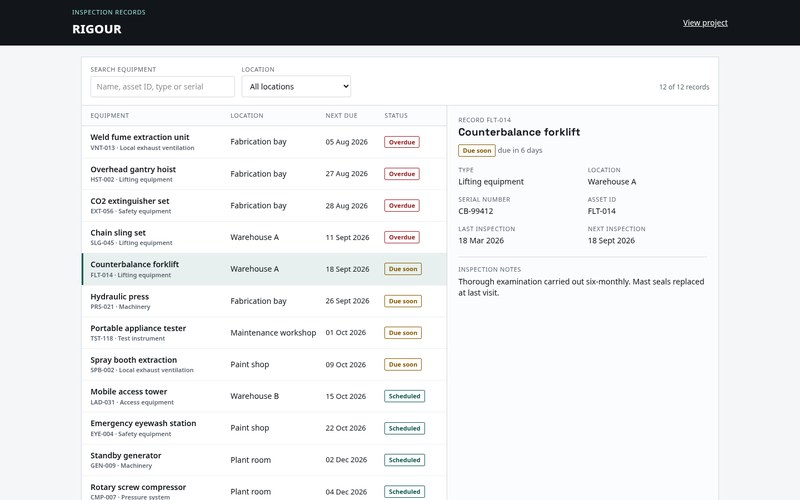
Equipment records with inspection status, search, location filters and record details.
View RigourA bespoke database brings business information into one system built around the records, relationships and processes the team actually uses.
Custom database development is useful when a clearly defined process no longer fits the tools used to manage it.
Tell us about your projectA database can help when information has become fragmented, repeated or difficult to follow. It is not a reason to replace every spreadsheet: the value comes when one agreed system makes an established process clearer.
The structure follows the information the business needs, rather than forcing every record into one long list.
Customer, project, supplier and product records can sit together, with the relationships between them kept clear.
Forms, search and filters help users add, update and find the right records without navigating a spreadsheet structure.
Controlled user access, status tracking, document links or uploads where required, and exports can support the agreed process.
01
Review how the work is managed now and where information moves between people or tools.
02
Define the records, fields and relationships the team needs to use and trust.
03
Set out how records are created, updated, searched and moved through each relevant status.
04
Confirm the screens, access, functions and responsibilities before the build starts.
05
Share working sections for review so decisions can be checked against the agreed process.
06
Check the records, permissions and main workflows before the system is prepared for use.
Rigour is our own demonstration of the type of database system ALTER can build. It links equipment records, locations, documents and status information in one searchable system.
Review the Rigour project or open the full demonstration.
Business software
Equipment records with inspection status, search, location filters and record details.
View RigourA database can form part of a wider piece of bespoke business software.
A new website, a redesign or a system for your team? Tell us what you have in mind and we will reply by email.